
Arslanbob: Journey to the World’s Largest Natural Walnut Forest
Discover Arslanbob: Home to the world’s largest natural walnut forest, sacred waterfalls, and authentic Kyrgyz village homestays. Plan your sustainable trekking and harvest tour.
The Green Heart of Jalal-Abad
Nestled in the Jalal-Abad region of Kyrgyzstan, the village and surrounding Arslanbob Forest represent one of Central Asia’s most extraordinary natural phenomena. This is not just a forest; it is the world’s largest natural-growth walnut forest, covering over 11,000 hectares.
Arslanbob offers a profound blend of ancient ecology, sacred pilgrimage sites, and authentic Kyrgyz hospitality, making it an essential destination for eco-tourists, hikers, and cultural enthusiasts.
The Green Giant: Ecology and History
The longevity and size of the Arslanbob Walnut Forest have birthed both scientific admiration and powerful legends.
1. Facts on the Forest
- Scale: The forest stretches across the fertile slopes of the Babash-Ata mountains, providing a crucial resource for the local population who own and harvest the trees under traditional land tenure systems.
- Species: The primary species is the common walnut (Juglans regia), which grows here naturally, rather than in an orchard.
- Ecological Significance: These ancient relic forests are critical for global biodiversity, acting as a genetic reservoir for walnut species worldwide.
2. The Legend of Alexander
Local legends credit Alexander the Great with the forest’s spread. It is said that his soldiers, upon passing through the valley in the 4th century BC, took walnuts back to Greece, where the seeds were planted. While historically unverified, this story powerfully links the Arslanbob area to the ancient Silk Road history.
Sacred Sites and Nomadic Legends
Arslanbob is named after Arslanbob-Ata, an 11th-century Muslim saint who is said to have planted the first walnut seeds here. The forest is considered a sacred place (Mazar) and draws pilgrims from across Central Asia.
🔹 The Waterfalls

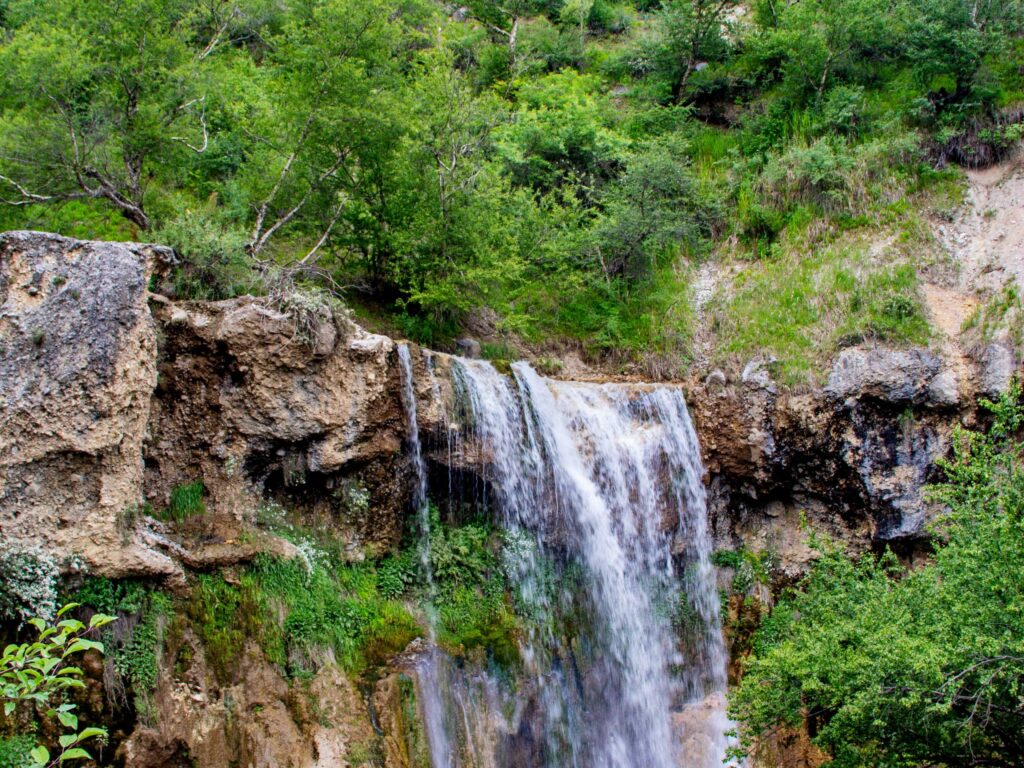
The area features two renowned waterfalls:
- The Big Waterfall (Katta Sharshara): Cascading over 40 meters, this site is primarily visited by women seeking blessings for fertility.
- The Small Waterfall (Kichine Sharshara): A picturesque 23-meter fall, popular for trekking.
🔹 The Holy Cave
Pilgrims visit a small cave near the village, where Arslanbob-Ata is believed to have prayed. The site offers a tranquil experience and panoramic views of the entire valley.
Trekking, Harvesting, and Village Life
Arslanbob operates as a community-based tourism (CBT) hub, ensuring that revenue directly benefits the local community. This offers travelers an intimate and responsible way to explore the region.
Top Activities:
- Walnut Harvest Tours: The peak season for harvesting is typically September and October. Tourists can participate in the gathering process, experiencing the local tradition first-hand.
- Trekking: Guided hikes are available to scenic spots like the Holy Rock or the Besh-Buloq (Five Springs) area, offering stunning views of the walnut canopy.
- Horse Riding: An excellent option for exploring the vast forest perimeter and reaching distant high-altitude pastures (jailoos).
- Homestay Immersion: Staying in a local home is mandatory here. It offers unparalleled insight into Kyrgyz daily life and hospitality, complete with traditional meals.
Logistics and Expert Travel Advice
Best Time to Visit
- Spring/Early Summer (May – June): Best for witnessing the forest in full bloom and enjoying pleasant hiking temperatures.
- Autumn (September – October): Ideal for the unique Walnut Harvest experience and stunning autumn colors, though nights begin to cool rapidly.
Getting There
- Proximity: Arslanbob is far from the capital (~700 km from Bishkek), but much closer to the southern city of Osh (~130 km).
- Access: We highly recommend starting tours from Osh (3-4 hours drive) or including Arslanbob as a mid-point on a longer Issyk-Kul loop itinerary.
- Accommodation: Note that large, formal hotels are non-existent. Accommodation consists exclusively of family-run guesthouses and homestays.