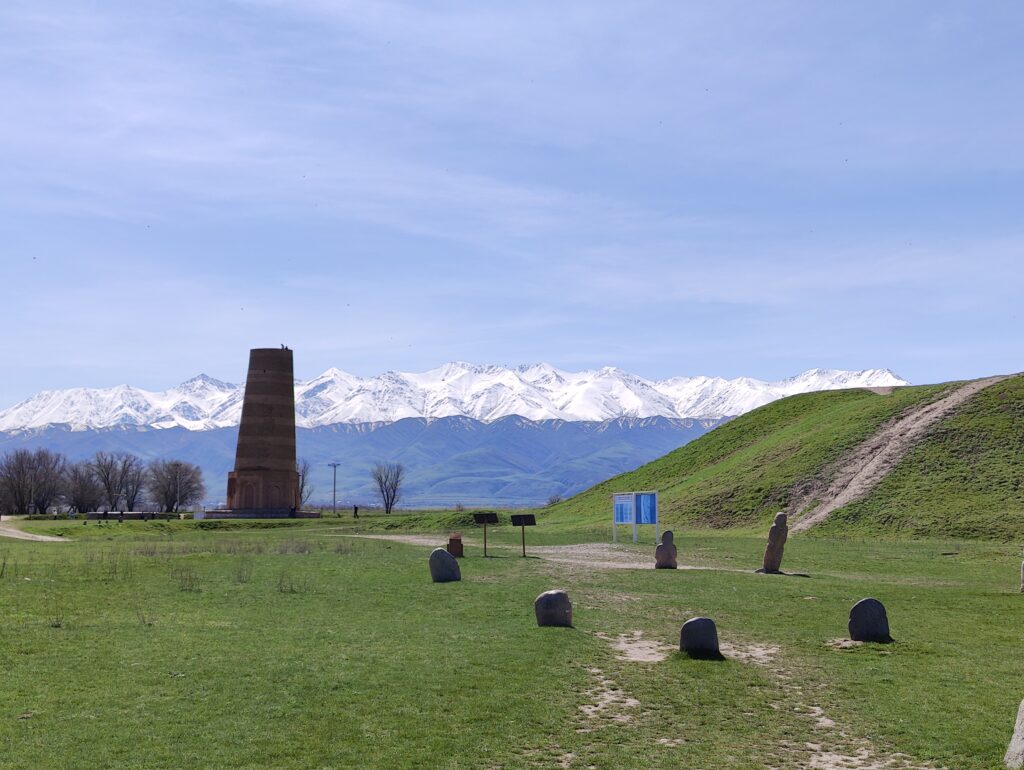

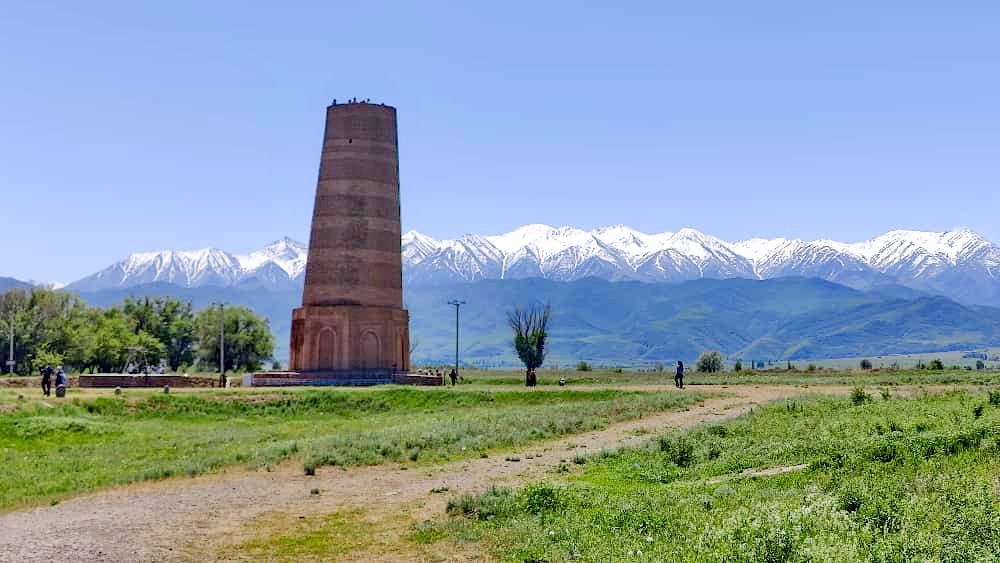
Burana Tower—not just a minaret, but a key historical complex designated as a UNESCO World Heritage site. It stands as a living witness to the rise and fall of Balasagun, the capital of the Karakhanid Kaganate, whose significance to the Great Silk Road cannot be overstated.
1. The Golden Age: The Flourishing of the Balasagun Capital
Burana Tower is the best-preserved remnant of the ancient city of Balasagun, located in the picturesque Chuy Valley, near the modern town of Tokmok.
- Era: 10th – 13th centuries AD.
- Status: Balasagun reached its zenith in the 11th century, becoming the capital of the powerful Karakhanid Kaganate. This was a period of high cultural, economic, and architectural activity.
- Significance: The city functioned as a vital cultural, trade, and religious hub on the transcontinental Silk Road, providing both commerce and protection for caravans.
Interesting Fact: Balasagun was one of the largest cities in Central Asia of its time, inhabited by various cultures and religions: Nestorians, Buddhists, and, of course, Muslims. It was one of the few cities that surrendered to the Mongols without a fight in the 13th century, which allowed it to survive longer than many other regional centers.
2. Architectural Marvel: The Tower’s Construction and Collapse
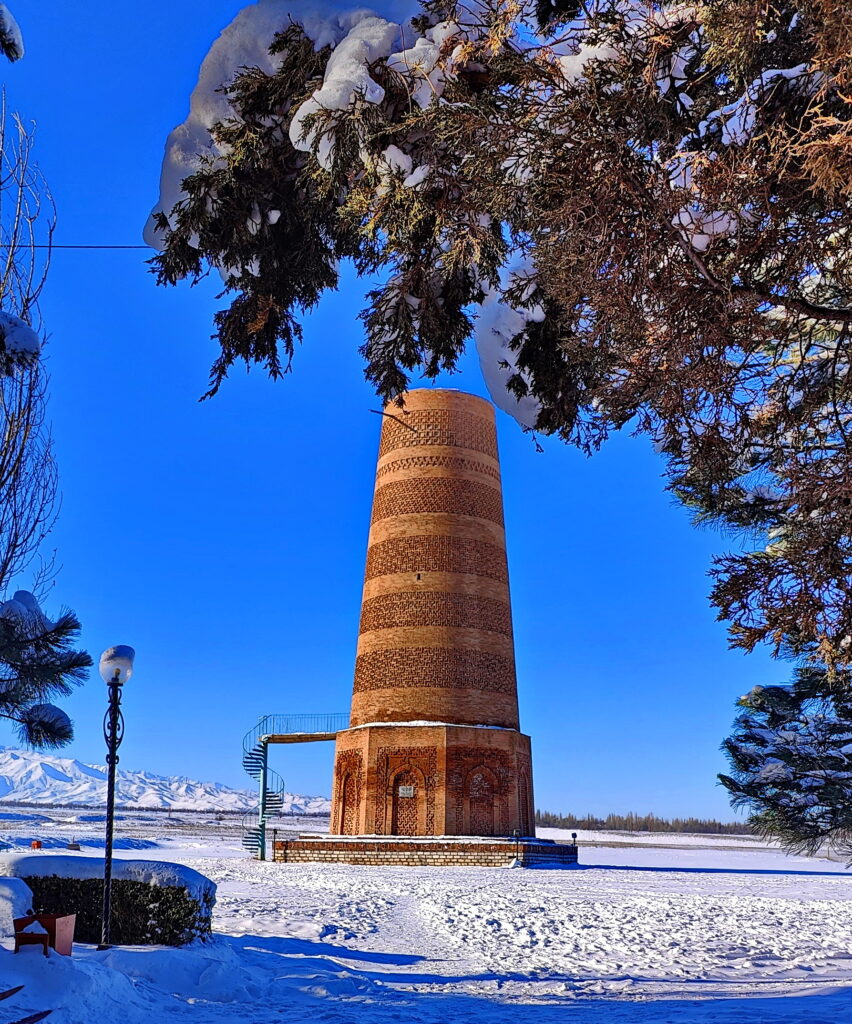
Burana Tower, originally built as a minaret—a tower for calling to prayer—showcases the mastery of Karakhanid-era Islamic architecture.
- Material and Style: Constructed from fired bricks in the traditional Islamic style of the era. Each brick layer features a distinct ornamental pattern.
- Original Height: In the 11th century, the tower’s height reached 44–48 meters. This made it one of the tallest structures in Central Asia.
- Current State: Today, the minaret stands at 22 meters. The collapse of most of the structure occurred in the 15th century due to a powerful earthquake. The upper part we see now was restored during the Soviet period (1970s).
Visitor Experience: Visitors can climb the narrow spiral staircase inside the tower to enjoy a panoramic view of the ruins of the ancient city and the Chuy Valley.
3. The Archaeological Complex: Balbals and Petroglyphs
The Burana complex is more than just a minaret. It is an open-air museum encompassing several historical eras.
- Balbals (Stone Statues): A unique collection of stone statues dating back to the 6th century AD is gathered on the complex grounds. These Turkic balbals were created in memory of deceased warriors and leaders. Their faces, oriented towards the East, trace the history of nomadic peoples.
- Petroglyphs and Artifacts: Also displayed nearby are petroglyphs (rock carvings), some dating back to the 2nd century BC, alongside artifacts found during the archaeological excavations of Balasagun (remnants of mausoleums, mosque foundations, and residential buildings).
Logistics for Visitors
- Location: 12 km south of the town of Tokmok, Chuy Region.
- Tourist Value: Burana Tower is an ideal stop en route from Bishkek to Issyk-Kul Lake, offering a deep historical immersion.
Burana Tower is a living testament to the past, where every brick and every balbal stone holds a remarkable story. We invite you on a journey through time to witness the grandeur of Balasagun and its invaluable contribution to the cultural heritage of the Silk Road.
Burana Tower is a living witness of th,