
Crime • Mountain Safety • Roads • Solo Travel • Border Areas • Emergency Numbers
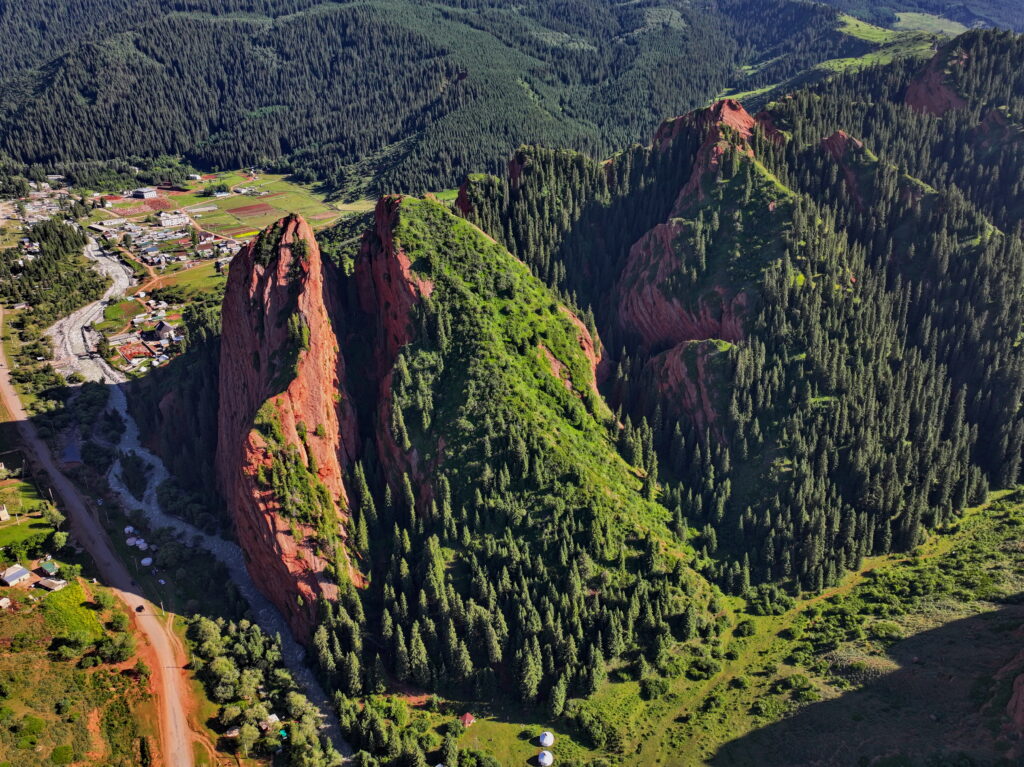
Yes — for most travelers, Kyrgyzstan can be a safe and rewarding destination when normal travel precautions are combined with realistic preparation for mountain and road conditions.
For visitors following established routes through Bishkek, Issyk-Kul, Karakol, Son-Kul and other popular destinations, the biggest practical risks are often not dramatic security threats.
They are much more likely to involve:
- difficult mountain roads;
- rapidly changing weather;
- altitude;
- limited mobile coverage;
- long distances from medical facilities;
- petty theft in crowded urban areas;
- and occasional restrictions in sensitive border regions.
This guide explains what travelers should actually pay attention to when planning a trip to Kyrgyzstan.
Updated: October 2026
KYRGYZSTAN SAFETY AT A GLANCE
Overall: Most established tourist routes are regularly travelled by international visitors.
Main Urban Risks: Pickpocketing, bag theft, nighttime robbery and drink spiking.
Main Outdoor Risks: Weather, altitude, avalanches, landslides, rockfall and limited rescue access.
Road Safety: Requires more attention than many first-time visitors expect.
Border Areas: Some regions require additional caution and may be subject to restrictions.
Solo Travel: Possible, but additional planning is important in remote areas.
Emergency Number: 112
Police: 102
Ambulance: 103
Fire & Rescue: 101
So, Is Kyrgyzstan Safe to Visit?
There is no country where travel can be described as completely risk-free.
Kyrgyzstan is no exception.
However, most international visitors travel through the country’s main tourism regions without serious problems.
Bishkek, Issyk-Kul, Karakol, Chon-Kemin, Kochkor and the major tourism routes receive travelers throughout the year.
The important distinction is that safety in Kyrgyzstan changes significantly depending on where you go and what you plan to do.
A city break in Bishkek requires normal urban awareness.
A trek across a 3,800-metre mountain pass requires a completely different level of preparation.
A 4×4 journey into a remote border region requires another set of precautions again.
For this reason, the most useful question is not simply:
“Is Kyrgyzstan safe?”
It is:
“What are the real risks on my specific route?”
Official Travel Advice for Kyrgyzstan
International governments do not all use the same travel-advisory system, so their wording and risk levels differ.
Travelers should always check the advice issued by their own government before departure.
Current international guidance generally distinguishes between the country’s main tourism regions and more sensitive border areas.
The majority of standard tourism itineraries do not pass through the regions that receive the strongest warnings.
However, travel advisories can change, especially after political events, severe weather or changes at international borders.
Before departure
Check:
- your government’s latest Kyrgyzstan travel advice;
- local conditions along your planned route;
- your travel insurance coverage;
- and any current restrictions affecting border regions or mountain roads.
Personal Safety in Bishkek and Other Cities
Kyrgyzstan’s cities generally require the same practical awareness you would use when travelling elsewhere.
The most common problems relevant to visitors are opportunistic rather than targeted.
Pickpocketing
Be more attentive in:
- busy bazaars;
- crowded public transport;
- bus stations;
- shopping areas;
- nightlife districts;
- and other crowded places.
Osh Bazaar in Bishkek is one place where travelers should pay particular attention to phones, wallets and bags.
Avoid keeping your passport, cards and all your cash together in one easily accessible pocket.
Nighttime Safety
Take more care after dark, particularly if you are alone.
Rather than stopping an unknown car on the street, use a recognized taxi service or a taxi arranged through your accommodation.
Around bars, clubs and nightlife districts:
- keep your drink with you;
- do not accept open drinks from strangers;
- avoid walking alone through isolated parks or poorly lit areas late at night;
- and make sure you know how you are getting back to your accommodation.
What If Police Ask for Identification?
Travelers may occasionally be asked to show identification.
Keep your passport and immigration documents secure and accessible.
It is also useful to keep digital copies of important documents separately.
If someone claiming to be a police officer demands an unofficial payment or asks you to hand over your wallet, stay calm.
Ask to deal with the matter at an official police station rather than paying cash informally.
Legitimate traffic or administrative fines should have an official process.
Is Kyrgyzstan Safe for Solo Travelers?
Independent travel is common in Kyrgyzstan.
Bishkek, Karakol, Issyk-Kul and established tourism towns are relatively straightforward for experienced independent travelers.
The situation becomes different once you leave populated areas.
Solo travelers heading into remote mountains should pay particular attention to:
- route planning;
- weather;
- transport back from trailheads;
- mobile coverage;
- emergency communication;
- accommodation availability;
- and informing somebody of the planned route and return time.
Travelling alone in a city and trekking alone across a remote mountain pass are not the same risk category.
Is Kyrgyzstan Safe for Solo Female Travelers?
Many women travel independently through Kyrgyzstan.
As elsewhere, personal circumstances, destination and time of day matter.
In cities, normal precautions include using registered or app-based taxis at night, avoiding isolated areas after dark and keeping control of drinks in bars and clubs.
In rural communities, clothing tends to be somewhat more conservative than in central Bishkek.
Visitors do not need to change their entire wardrobe, but dressing respectfully when entering mosques, religious places or traditional homes is appreciated.
For remote hiking or camping, the larger safety issue is often isolation rather than gender: poor communication, few people nearby and slow emergency response can make a small problem more serious.
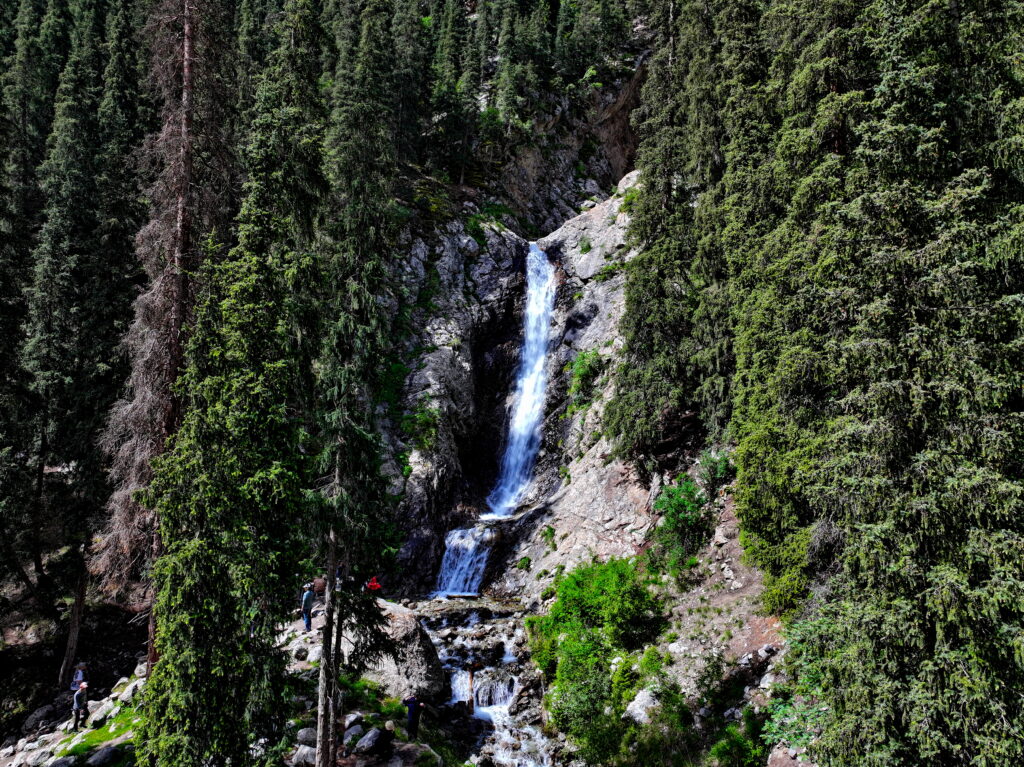
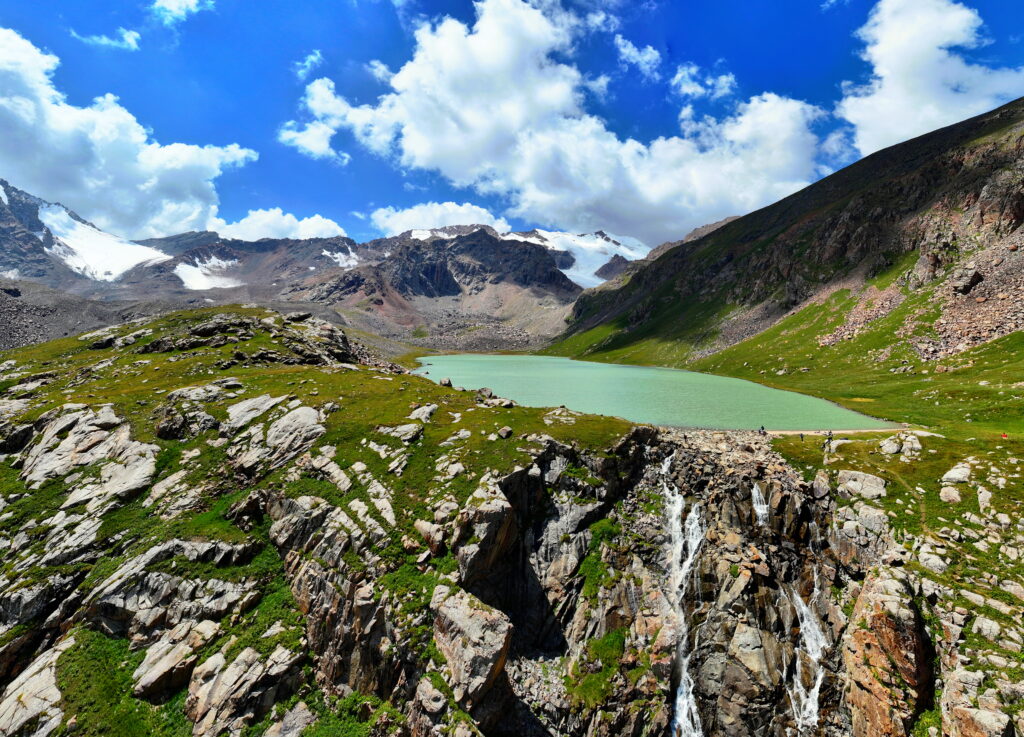
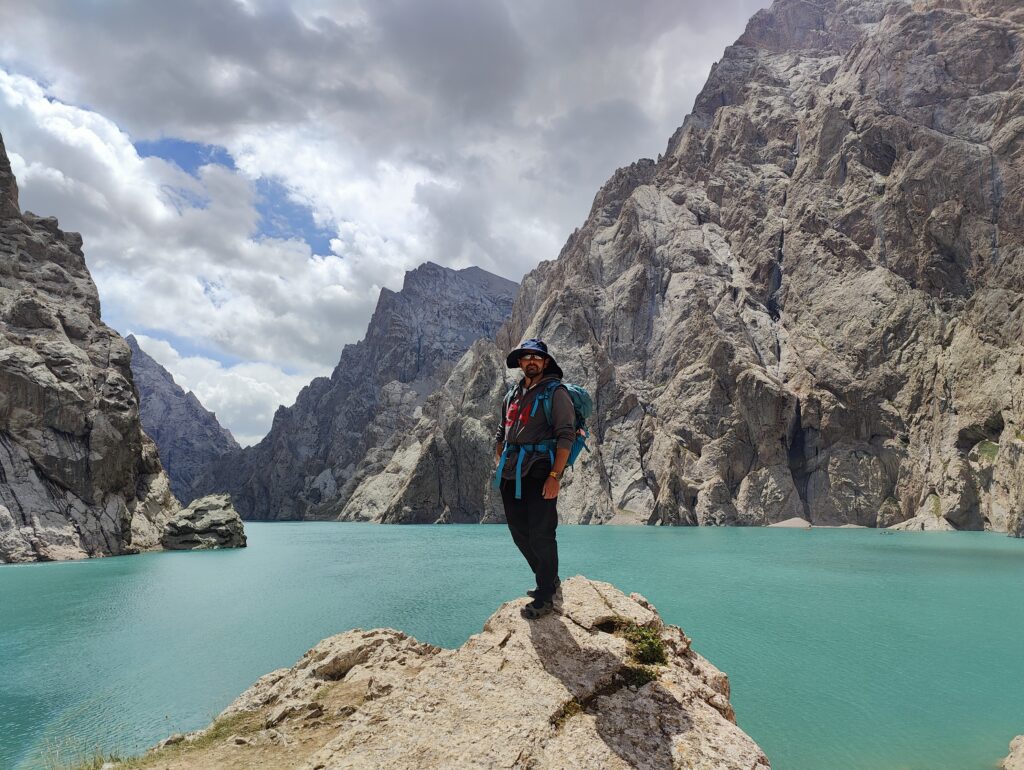
Mountain Safety: The Risk Travelers Should Take Seriously
For adventure travelers, the mountains deserve more attention than ordinary city crime.
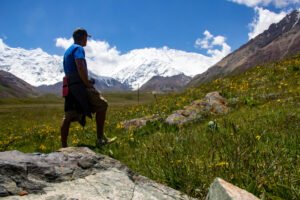
Kyrgyzstan contains extensive areas of the Tien Shan where conditions can change very quickly.
Even during summer you may encounter:
- snow at higher altitude;
- sudden thunderstorms;
- strong wind;
- cold nights;
- rockfall;
- landslides;
- swollen rivers;
- and rapidly changing trail conditions.
Autumn, winter and spring introduce additional snow and avalanche hazards.
Do Not Rely Only on Your Phone
Mobile coverage becomes unreliable or disappears entirely in many mountain areas.
An online map should not be your only navigation system.
Before entering remote terrain:
- download offline maps;
- carry sufficient battery capacity;
- tell someone your route;
- give them an expected return time;
- check the latest local conditions;
- and consider appropriate satellite communication for genuinely remote routes.
Do Not Treat an Online GPS Track as Proof a Route Is Safe
A trail uploaded last year may now have:
- a damaged bridge;
- a dangerous river crossing;
- landslide debris;
- deep snow;
- or a blocked mountain pass.
Conditions in the Tien Shan change.
Local information immediately before departure can be more valuable than an old GPS track.
Altitude Safety
Several popular destinations in Kyrgyzstan are located around or above 3,000 metres.
For example:
Son-Kul: approximately 3,000 m
Ala-Kul Pass: approximately 3,860 m
Arabel highlands: around 3,800 m
Travelers can gain altitude surprisingly quickly by road.
Pay attention to how you feel, especially after a rapid ascent.
Symptoms such as headache, unusual fatigue, dizziness or nausea should not automatically be ignored simply because they interfere with the itinerary.
For high-altitude trekking, your insurance should cover the altitude and activities you actually plan to undertake.
Travelers with relevant medical concerns should discuss high-altitude travel with a qualified medical professional before departure.
Mountain Rescue and Remote Medical Assistance
Emergency response in a remote Kyrgyz mountain valley is very different from emergency response in Bishkek.
Some places may be several hours from:
- a paved road;
- a hospital;
- mobile coverage;
- or a rescue team.
Difficult terrain or weather can delay assistance considerably.
This is one of the strongest reasons to have travel insurance that covers:
- trekking;
- your maximum planned altitude;
- horseback riding if applicable;
- skiing or winter sports if applicable;
- medical treatment;
- and evacuation or repatriation.
Do not assume a standard low-cost travel policy automatically includes high-altitude activities.
Read the policy conditions.
Road Safety in Kyrgyzstan
Road travel deserves serious attention.
The quality of roads varies dramatically.
One day you may travel on a modern highway around Bishkek or Issyk-Kul.
The next day you may be on a narrow mountain road with:
- potholes;
- gravel;
- rockfall;
- snow;
- animals;
- limited lighting;
- steep drops;
- or no guardrails.
Avoid Unnecessary Night Driving in Remote Areas
Night driving is more difficult because of poor lighting, animals on the road and road damage that may be difficult to see.
When possible, plan long mountain transfers during daylight.
Do You Need a 4×4?
Not everywhere.
Many popular destinations are accessible by ordinary vehicles in suitable conditions.
A 4×4 becomes important when the route actually involves:
- rough mountain roads;
- deep snow;
- high-clearance sections;
- river crossings;
- or remote seasonal tracks.
A responsible operator should choose the vehicle according to the route and current conditions rather than simply using “4×4” as a marketing term.
Seatbelts Matter
Use them.
This sounds obvious, but road travel is one of the parts of a Kyrgyzstan trip where a simple precaution can make the greatest difference.
If you hire private transport, you are entitled to expect a vehicle suitable for the route and a driver who does not treat mountain roads like a race.
Winter Travel Safety
Winter transforms Kyrgyzstan, but it also creates additional risks.
Roads outside major towns may be affected by:
- snow;
- black ice;
- temporary closures;
- avalanches;
- and poor visibility.
High mountain roads can become inaccessible with little notice.
A winter itinerary should therefore include some flexibility.
If weather requires changing the order of attractions or cancelling an unsafe mountain section, that is responsible trip management rather than a failure to follow the program.
Border Areas: What Travelers Need to Know
The security situation around Kyrgyzstan’s borders has changed substantially in recent years.
Kyrgyzstan and Tajikistan reached a border agreement in 2025, and cross-border movement resumed at designated checkpoints.
However, travelers should still treat parts of the Kyrgyzstan–Tajikistan border and Batken region differently from mainstream tourism areas such as Issyk-Kul or Karakol.
Past conflict has left concerns about mines or unexploded ordnance in some areas, and restrictions can change at short notice.
If travelling near sensitive borders:
- use recognized roads and border crossings;
- check current conditions;
- follow instructions from local authorities;
- do not wander into restricted terrain;
- and confirm whether your itinerary requires a border-zone permit.
Some remote tourism routes elsewhere in Kyrgyzstan also pass through controlled border zones and may require documents to be arranged in advance.
Border Crossings Can Change
Do not assume that a border crossing is open simply because it appears on an online map.
International checkpoints can change operating status.
If your itinerary includes an overland border crossing into Kazakhstan, Uzbekistan, Tajikistan or China, confirm its current status shortly before travel.
Only use officially recognized crossings.
Demonstrations and Political Events
Political demonstrations can occur in Bishkek and elsewhere.
Most visitors will never encounter one, but the sensible approach is straightforward:
do not participate, do not move into the middle of a crowd to take photographs and do not remain in an area if tension is developing.
If a demonstration occurs:
- leave the immediate area;
- monitor local information;
- follow instructions from authorities;
- and allow extra time if roads are closed.
Tourists are rarely the focus of domestic political events, but being accidentally caught inside a confrontation is unnecessary.
Photography and Drones
Do not casually photograph or fly drones around:
- border checkpoints;
- military installations;
- police facilities;
- security infrastructure;
- or other obviously sensitive government locations.
Drone regulations can change and may involve import or operating requirements.
Check the current rules before bringing a drone into the country.
Local Laws Travelers Sometimes Miss
Foreign visitors are subject to Kyrgyz law.
A few points deserve particular attention.
Drugs
Drug offences can carry serious legal consequences.
Do not transport substances for other people and do not assume that something legal in your home country is legal in Kyrgyzstan.
Vapes and E-Cigarettes
Kyrgyzstan has introduced restrictions affecting e-cigarettes, vaping devices and related products.
Check current customs and legal rules before bringing vaping equipment into the country.
Public Drinking
Drinking alcohol in public places can be prohibited even though alcohol itself is widely available.
Sensitive Photography
Avoid photographing military, police or border-security facilities.
Food and Water Safety
There is no need to approach every meal in Kyrgyzstan with suspicion.
Restaurants, hotels, established guesthouses and yurt camps serve international travelers every day.
Still, sensible food hygiene matters.
When travelling in remote areas:
- ask whether water is intended for drinking;
- use bottled, boiled or treated water when the source is uncertain;
- wash or sanitize your hands before meals;
- and communicate food allergies clearly.
Do not assume that every clear mountain stream is safe to drink directly.
Livestock graze throughout many valleys.
Medical Care
Medical facilities are easiest to access in Bishkek and larger regional centers.
Facilities in remote areas are more limited.
This matters particularly for:
- trekking accidents;
- altitude problems;
- fractures;
- severe allergic reactions;
- and other conditions requiring specialist treatment.
Carry the medication you personally need rather than assuming it will be available in a small mountain village.
If you travel with prescription medication, check whether any documentation is required before entering Kyrgyzstan.
Air Quality in Bishkek
Winter visitors should be aware that Bishkek can experience periods of poor air quality during the colder months.
Travelers with asthma or respiratory conditions may want to monitor current air-quality reports and carry any required medication.
This generally affects winter city stays more than summer mountain itineraries.
Earthquakes and Natural Hazards
Kyrgyzstan is located in a seismically active region.
Earthquakes and smaller tremors can occur.
In mountain regions, other natural hazards include:
- landslides;
- mudflows;
- rockfall;
- avalanches;
- and flooding after heavy rain or snowmelt.
Follow local warnings rather than attempting to continue through a closed road or unsafe valley.
Emergency Numbers in Kyrgyzstan
Save these numbers before your trip:
112 — Unified Emergency Service
102 — Police
103 — Ambulance
101 — Fire & Rescue
If travelling into remote mountain areas, also save the contact details of:
- your accommodation;
- your local guide or driver;
- your tour operator;
- and your travel insurance emergency assistance line.
Do not rely on being able to search for these numbers online during an emergency.
What Should You Do If You Lose Your Passport?
Contact your embassy or consulate and report the loss to local police when required.
Keep:
- a digital passport copy;
- a copy of your insurance;
- visa or entry documents;
- and emergency contact details
stored somewhere separate from the originals.
Do not keep every important document and payment card in the same bag.
Safety Checklist Before Leaving Bishkek
Before heading into the mountains, make sure you have:
- sufficient cash;
- offline maps;
- accommodation contact details;
- enough fuel if self-driving;
- warm clothing;
- drinking water;
- personal medication;
- charged phones and power banks;
- passport and required permits;
- appropriate travel insurance;
- and somebody who knows your route.
For a remote trek, add a clear expected return time.
Independent Travel or Organized Tour?
You do not need a guide everywhere in Kyrgyzstan.
Bishkek, Karakol and many established destinations can be explored independently.
A guide, experienced driver or organized tour becomes more useful when the itinerary involves:
- remote mountain roads;
- several destinations in limited time;
- border-zone permits;
- horse trekking;
- high-altitude trekking;
- winter travel;
- or areas with weak mobile coverage.
The safest and most efficient solution is often a combination:
independent city travel + organized transport or guiding for the difficult sections.
Frequently Asked Questions
Is Kyrgyzstan safe for tourists in 2026?
For most travelers using established tourist routes, Kyrgyzstan can be visited with normal precautions.
Current international advisories nevertheless highlight specific risks including road safety, mountain conditions, petty crime, demonstrations and selected border regions.
Always check your own government’s latest advice before departure.
Is Bishkek safe at night?
Many visitors go out in Bishkek without problems, but additional caution is sensible after dark.
Use registered or app-based taxis, avoid isolated poorly lit areas and take extra care around nightlife districts.
Is Kyrgyzstan safe for solo female travelers?
Women do travel independently in Kyrgyzstan.
As with solo travel elsewhere, use additional caution at night, use reliable transportation and plan remote travel carefully.
Mountain isolation and limited emergency access can be as important as urban personal-safety concerns.
Is it safe to trek alone in Kyrgyzstan?
For remote mountain routes, travelling alone increases the consequences of an accident, navigation error or sudden weather change.
Official travel guidance recommends avoiding solo trekking in remote areas, informing someone of your route and adapting plans to current conditions.
Is driving in Kyrgyzstan safe?
Driving conditions vary greatly.
Main highways may be straightforward, while mountain roads can be narrow, rough, icy or exposed.
Avoid unnecessary night driving on remote roads and choose a vehicle appropriate to the route.
Is Issyk-Kul safe?
Issyk-Kul is one of Kyrgyzstan’s main tourism regions and receives large numbers of domestic and international visitors.
Normal travel precautions still apply, particularly around roads, water activities and mountain excursions.
Is Son-Kul safe?
Son-Kul is a popular tourism destination, but it lies at approximately 3,000 metres and is remote.
Weather, altitude, road conditions and limited access to medical assistance deserve more attention than ordinary urban crime.
Is the Kyrgyzstan–Tajikistan border safe?
The situation improved significantly after the 2025 border agreement, but official travel advisories still recommend additional caution in some border areas.
Conditions and checkpoint status can change, so check current information before travelling through Batken or crossing the border.
Do I need travel insurance for Kyrgyzstan?
We strongly recommend it.
For active trips, confirm that the policy covers your actual activities and maximum altitude, as well as emergency treatment and evacuation where appropriate.
What number should I call in an emergency?
Call 112 for the unified emergency service.
Police: 102
Ambulance: 103
Fire and rescue: 101
Plan Your Kyrgyzstan Trip with the Route in Mind
A safe Kyrgyzstan itinerary is not created simply by choosing the most famous destinations.
It should take into account:
season • road conditions • altitude • travel time • vehicle type • permits • accommodation • activity level
That is especially important once the route moves beyond Bishkek and the main roads.
Planning your first visit?
Read our complete Kyrgyzstan Travel Guide for visas, money, seasons, transport and itinerary planning.
Heading into the mountains?
See our Kyrgyzstan Mountain Travel Guide for high-altitude routes and practical planning.
Want us to organize the difficult parts?
Explore our Kyrgyzstan Tours or tell us your dates, number of travelers and preferred activity level.
We can help build a route that makes sense for the season rather than simply connecting points on a map.