

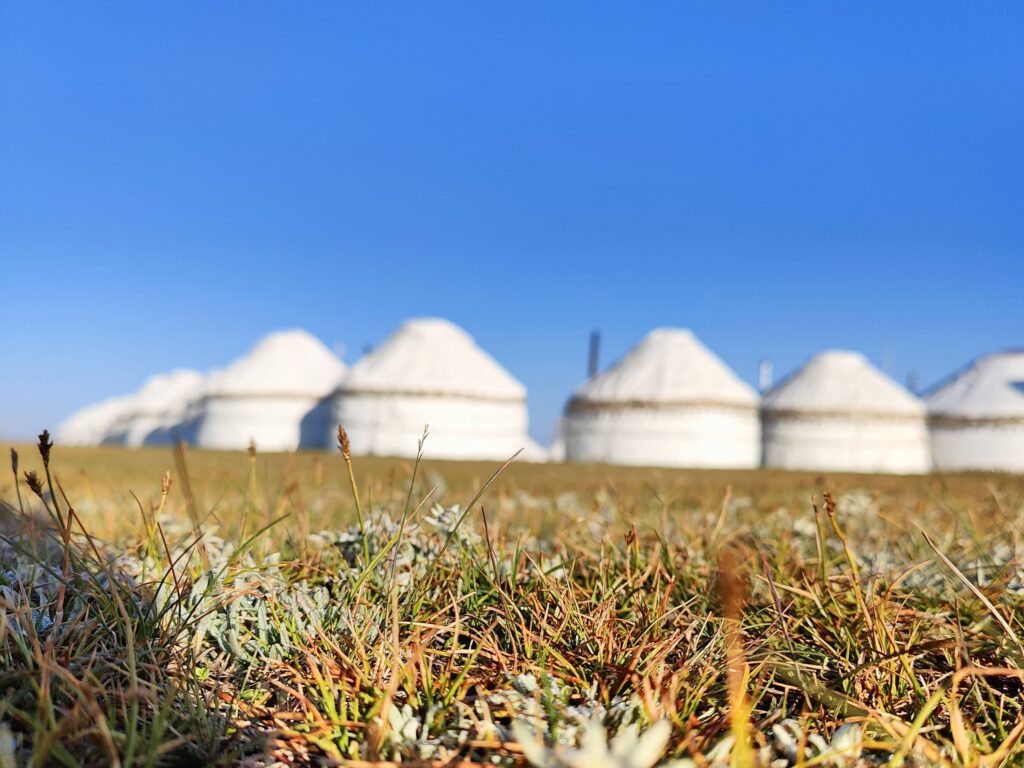
The Yurt is not merely a traditional dwelling of the nomadic peoples of Central Asia; it is a living symbol of the history, culture, and philosophy of the Kyrgyz nation. It is the ingenious invention of ancestors, perfectly adapted to the harsh conditions of nomadic life. If you travel through Kyrgyzstan, an encounter with a yurt on the high-mountain pastures (jailoo) is an opportunity to touch ancient heritage.
History and Function
The origins of the yurt are rooted in deep antiquity, possibly dating back to the Late Bronze Age (12th–9th centuries BC). The yurt was an indispensable companion to the Kyrgyz, who for centuries led a nomadic lifestyle, moving across the vast steppes and mountain valleys of the Tian Shan in search of the best pastures for their livestock.
The main functions of the yurt:
- Mobility and Assembly Speed: The light, collapsible structure allowed the dwelling to be quickly assembled and disassembled in just a few hours. The yurt’s elements were easily transported on pack animals (horses, camels, yaks).
- Reliability and Comfort: The circular shape ensures stability against strong winds and snowfalls. The felt covering (koshma) made of sheep’s wool excellently retains heat in the cold and provides coolness in the heat, making the yurt comfortable year-round.
- Autonomy: The opening in the center of the dome (tündük) serves for ventilation, lighting, and smoke removal from the hearth, which is located in the center.
Structure: The Engineering Genius of Nomads
The Kyrgyz yurt (boz üy) is striking in its functionality and the fact that it is built without a single nail, using only natural materials: wood, felt, and leather straps.
The four key structural elements:
- Kerege: Wooden folding lattice walls that form the circular frame of the yurt and determine its size. The more segments the kerege has, the larger the yurt.
- Uuk: Dome poles that are fastened at one end to the top edge of the kerege and at the other end to the rim of the tündük.
- Tündük: The round wooden rim at the center of the dome. It is the “crown” of the yurt, its soul, and the most sacred element, through which the world and the stars are seen.
- Koshma: The felt covering made of sheep’s wool, draped over the wooden frame, providing protection from the weather.
The interior space is traditionally divided into zones:
- Eshik: The entrance, which in Kyrgyz tradition is usually oriented to the east.
- Tör: The place of honor opposite the entrance, where guests are received and the most valuable possessions (blankets, carpets) are stored.
- Er Jak: The left, male side, where hunting gear, saddles, and weapons are kept.
- Epchi Jak: The right, female side, where household utensils, dishes, and handicraft tools are located.


Significance for the Kyrgyz People
The yurt holds not only practical but also deep cultural and symbolic significance for the Kyrgyz. It is a tangible representation of their nomadic heritage and family unity.
- Symbol of Family and the Universe: The circular shape of the yurt reflects the cycle of life, infinity, and harmony with nature. The entire life of the family took place within the yurt—from birth to weddings and memorial rituals.
- Tündük – National Sanctity: The Tündük is so significant that it is depicted in the center of the State Flag of Kyrgyzstan 🇰🇬, symbolizing unity, the hearth, and the Universe. Its inheritance symbolized the continuity of generations.
- Craftsmanship and Handiwork: Manufacturing a yurt is a complex process requiring high skill. The traditions of the craft, including woodworking and felt making (shyrdaks, tushkiyiz), were passed down from generation to generation and are an important part of the cultural heritage.
- Hospitality: Even today, the yurt remains the center of Kyrgyz hospitality. By staying in a yurt camp, you will immerse yourself in an atmosphere of warmth and the traditional way of life.
While most Kyrgyz now live in modern homes, the yurt has not vanished into the past. It is still used by shepherds on summer pastures, erected for national holidays (tois), weddings, and as a popular form of eco-tourism. Visiting a yurt is a unique experience that allows you to feel the spirit of freedom and hospitality of the ancient nomads.