
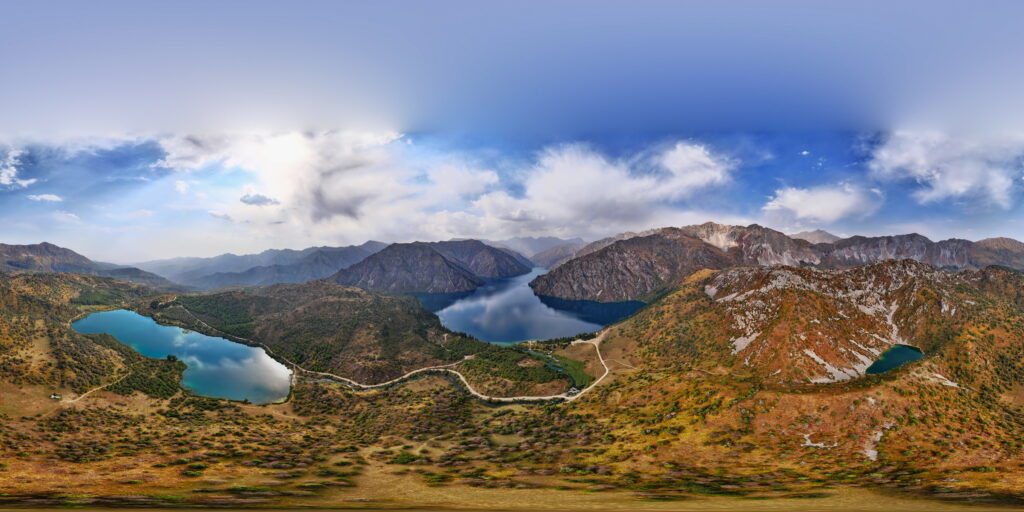
Kyrgyzstan is the hidden treasure of Central Asia—a land where time slows down, giving way to the majesty of nature and the wisdom of ancestors. If you are planning to travel to Kyrgyzstan, prepare for a journey that combines the adrenaline of snow-capped peaks, the silence of high-altitude lakes, and the unparalleled warmth of Eastern hospitality. In this comprehensive guide, we have gathered everything from geographical records to the nuances of the local mentality to ensure your tours to Kyrgyzstan are truly unforgettable.
Geography: Between the Tien Shan and the Pamir
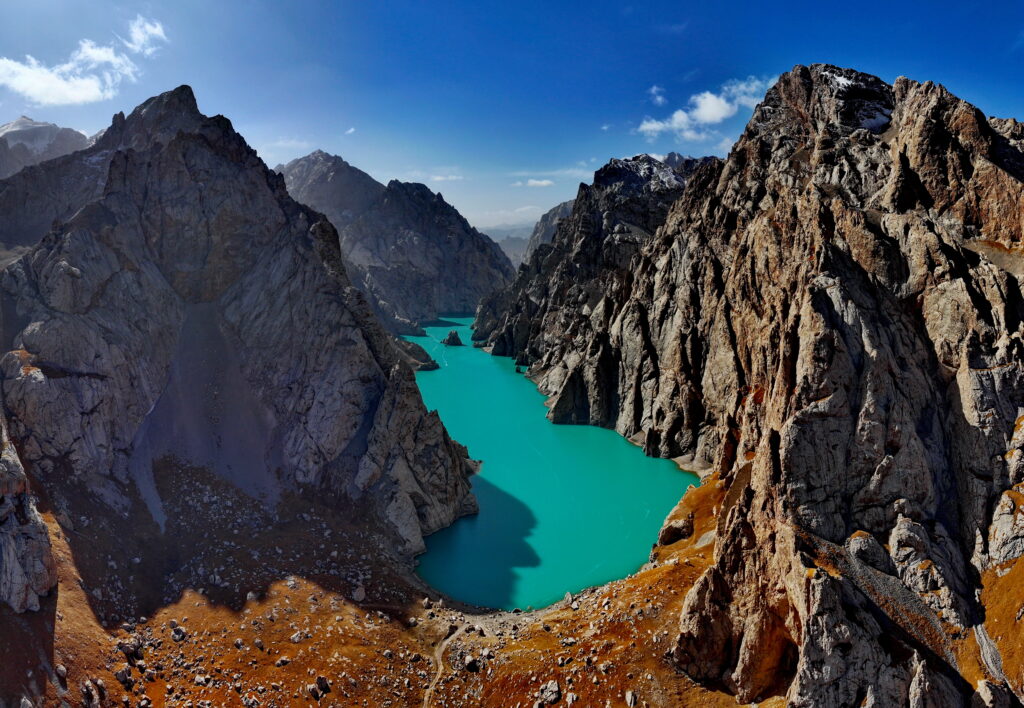
Kyrgyzstan is a high-altitude country, with over 90% of its territory situated more than 1,500 meters above sea level. Two of the world’s greatest mountain systems dominate the landscape:
1. The Majestic Tien Shan
The “Celestial Mountains” (as the name translates from Chinese) cover most of the country. This is the heart of the Central Tien Shan, where the most rugged and beautiful peaks are concentrated.
- Peak Pobeda (Jengish Chokusu): The pride of the country and a challenge for the world’s elite mountaineers. Reaching an altitude of 7,439 meters, it is officially recognized as the northernmost 7,000-meter peak in the world. The weather here is unpredictable, and its slopes require exceptional skill.
- Khan Tengri Peak: Neighboring Pobeda, the “Lord of the Sky” (6,995m, or 7,010m including the glacier). Its perfect pyramidal shape made of pink marble glows with incredible colors at sunset.
2. The Rugged Pamir
In the south of the country, along the borders with Tajikistan and China, lie the ranges of the Pamir-Alay and the Trans-Alay—the northern “gateway” to the great Pamir.
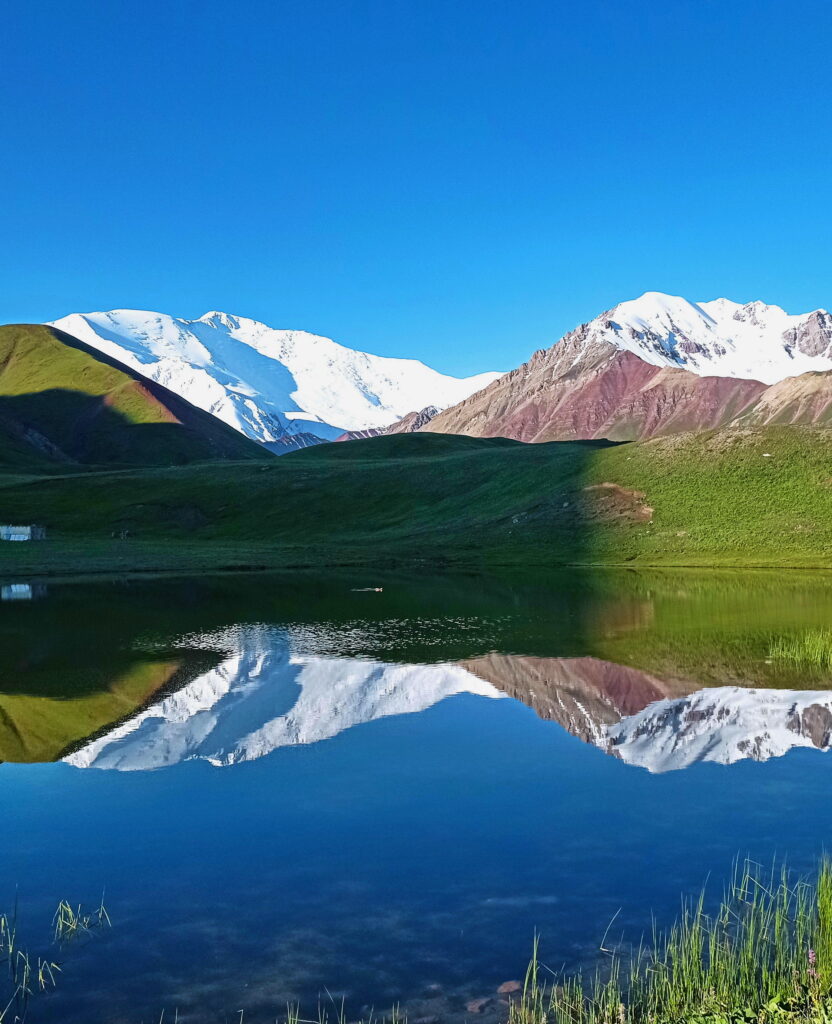
- Peak Lenin (7,134m): One of the most popular 7,000-meter peaks for mountaineers due to its relatively accessible climbing routes. The Pamir landscapes differ from the Tien Shan; here, the mountains seem more massive, and the valleys feel endless.

North and South: Two Faces of One Country
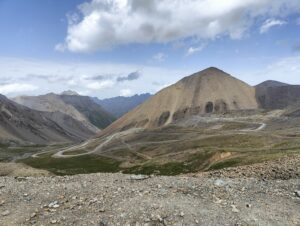
When planning to travel to Kyrgyzstan, it is essential to understand the regional differences. The North and South are connected by one of the most scenic high-altitude roads in the world (the Bishkek-Osh highway), crossing the dramatic Too-Ashuu and Ala-Bel passes.
Northern Kyrgyzstan: Lakes and Alpine Meadows
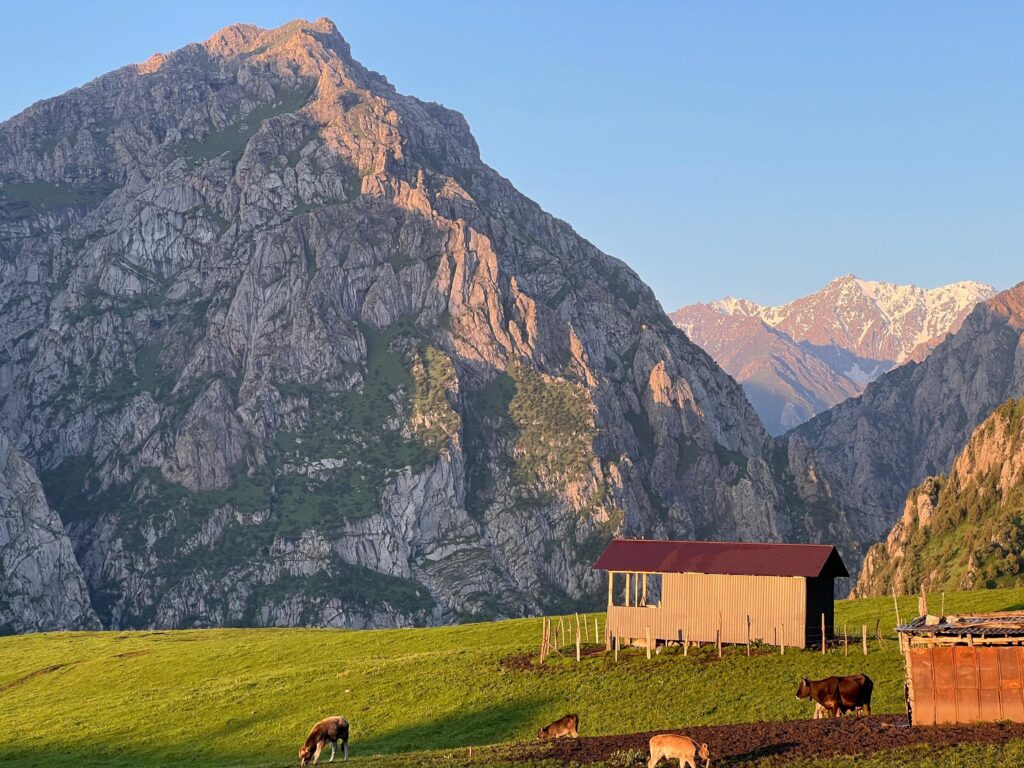
The North is primarily defined by Issyk-Kul, the “Pearl” of the country. This lake never freezes (hence the name “Warm Lake”) and is the second-largest high-altitude lake in the world. This region also hosts the famous alpine pastures (jailoo) of Son-Kul, where tourists can live in yurts far from civilization.

Southern Kyrgyzstan: The Cradle of Civilizations
The South offers a completely different atmosphere. It is warmer here, the air is thick with the scent of spices and grilled meat, and history is felt in every stone.
- Osh: One of the oldest cities in Central Asia (over 3,000 years old). In the heart of the city rises the sacred Sulayman-Too Mountain, a UNESCO World Heritage site.
- Jalal-Abad and Arslanbob: The south is home to the unique ancient walnut forests of Arslanbob. This is the largest natural walnut forest massif on the planet. According to legend, Alexander the Great took these walnuts back with him, which is how they reached Europe and became known as “walnuts” (or “Greek nuts” in Russian).
- Batken: A region famous for its apricot orchards and the unique Aigul flower.
Population and Cultural Diversity
Kyrgyzstan is a prime example of how dozens of cultures can coexist peacefully in a small territory. Today, the republic is home to over 7 million people.
- 80 Nationalities: While the main ethnic group is the Kyrgyz (approx. 77%), the country is home to representatives of over 80 nationalities. These include Uzbeks (especially in the south), Russians, Dungans, Uyghurs, Tatars, Kazakhs, Germans, and many others.
- Unity in Diversity: This melting pot has created a unique environment. For example, Kyrgyz cuisine has absorbed elements of Chinese (via the Dungans), Uzbek, and Russian cooking. Tours to Kyrgyzstan are always a gastronomic adventure—from fragrant Osh pilaf to Karakol Ashlyan-fu.
Language: How to Communicate?
For travelers choosing to travel to Kyrgyzstan, communication is quite simple due to the country’s bilingual nature.
- The Kyrgyz Language: This is the State Language. It belongs to the Turkic language group and is melodic and rich. It is the foundation of the national identity and the language of the great “Manas” epic. Locals deeply appreciate it when foreigners know at least a few words: Salamatssyzby (Hello), Rakhmat (Thank you).
- The Russian Language: This holds the status of an Official Language. It is spoken by almost everyone in the cities and serves as the language of interethnic communication. Traveling from Bishkek to Osh, you will be able to find a common language with the local population everywhere.
Religion: Freedom and Tolerance
Kyrgyzstan is a secular state where the Constitution guarantees freedom of religion. The religious landscape is as diverse as its ethnic makeup.
- Islam: Approximately 80-85% of the population are Muslims (mostly Sunni of the Hanafi school). Islam in Kyrgyzstan is moderate, closely intertwined with nomadic customs and pre-Islamic traditions (such as respect for the spirits of ancestors).
- Christianity: The second-largest confession (about 15%), represented mainly by Orthodox Christianity, though there are also Catholic, Lutheran, and Baptist communities. In large cities like Bishkek and Karakol, the golden domes of churches harmoniously coexist with mosque minarets.
- Other Religions: The country also hosts communities of Buddhists, Baha’is, and a Jewish community. This religious tolerance makes travel to Kyrgyzstan comfortable for representatives of any culture.
Kyrgyz Traditions: The Nomadic Code
When you travel to Kyrgyzstan, you will inevitably encounter traditions passed down orally for millennia.
The “Manas” Epic
This is not just a book; it is the world’s largest epic (included in the UNESCO list). It contains the entire wisdom, history, and ethics of the people. Tellers—manaschi—can recite it for days on end, which is a form of deep cultural meditation.
Hospitality (Konok Tosuu)
The Kyrgyz have a saying: “Konoktuu uido kut bar” (There is grace in a house with a guest). If you visit a village (ayyl), you won’t be allowed to leave until you’ve been served tea with fresh cream (kaimak) and warm bread. This sincere desire to share the best is a core national trait.
The Yurt and Daily Life


The yurt (boz-uy) is a symbol of the universe. Every element has meaning. For example, the tunduk (the wooden circular top) is depicted on the national flag as a symbol of unity and light. Staying in a yurt during your tours to Kyrgyzstan allows you to feel the true rhythm of nature.
Why Choose Our Tours to Kyrgyzstan?
We understand that modern travelers seek more than just a “pretty picture”; they seek deep meaning. When organizing your travel to Kyrgyzstan, we rely only on authentic and verified information.
- Safety: We know the mountain trails of the Tien Shan and Pamir like the back of our hands.
- Cultural Authenticity: We organize meetings with real craftsmen, manaschi, and shepherds on the high pastures.
- Personalized Approach: Whether it’s an expedition to Peak Pobeda or a relaxing stay in the walnut forests of Arslanbob, we make your journey unique.
Tours to Kyrgyzstan are an investment in your emotions and the expansion of your horizons. Discover the land where the sky meets the earth and the heart fills with freedom.
Useful Information (FAQ)
Do I need a visa? Kyrgyzstan is one of the most liberal countries in the region. Citizens of many countries (including the EU, USA, and CIS) can visit visa-free or obtain an e-visa easily.
When is the best time to go? For trekking and yurt stays, July and September are ideal. For visiting the south (Osh, Arslanbob), spring (April-May) and early autumn are beautiful.
What is the local currency? The national currency is the Kyrgyz Som (KGS). Cards and exchange offices work in cities, but it’s best to have cash in the mountains and remote villages.